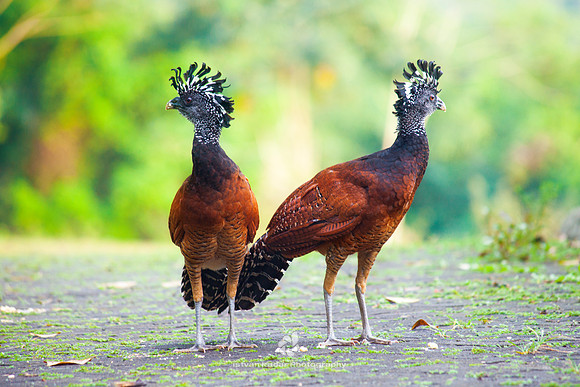
Great Curassows
While the range of the great curassow extends from southern Mexico to western Ecuador, their habitat is usually limited to national parks and reserves. They build their nests of leaves and twigs in the forks and depressions of trees. The male curassow leads his family and whistles when there are signs of danger. Females lay two eggs at a time. Curassows are monogamous and travel in pairs or in small groups. The group can communicate by grunting. Like chickens, they tend to run rather than fly.
The curassow finds its food by foraging on fallen fruits, berries and seeds. Additionally they may scrape the ground in search of insects or small animals.
Deforestation of tropical forests is the major threat to the survival of the great curassow. Humans are a direct threat to the great curassow because the local inhabitants hunt them for food. Besides humans, snakes are also their predators.
© Istvan Kadar Photography