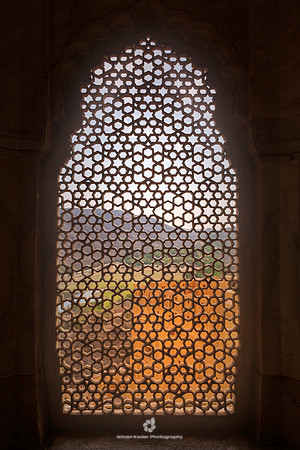
Jaalis (Latticed Window) at Amber Fort, Jaipur, India
Jaalis are intricately carved perforated screens, traditionally made from sandstone, and less commonly from marble or wood. Found in medieval Indo-Islamic, Hindu, and Islamic architecture, they were an elegant response to the intense heat, bright sunlight, and dry climate of northern India. Some of the finest examples—each featuring unique geometric or floral patterns—can be admired throughout the historic monuments of Jaipur.
Beyond their decorative beauty, jaalis served several practical purposes. They filtered harsh sunlight while allowing natural light to illuminate interiors, reduced heat by channeling cooling breezes through their small openings, and improved ventilation by creating a natural cooling effect. They also provided privacy without obstructing the view outside, much like modern one-way glass, allowing those indoors to look out while preventing passersby from seeing in. In periods when gender segregation was customary, jaalis also ensured the privacy of women’s quarters while enabling them to observe life beyond the home.
© Istvan Kadar Photography