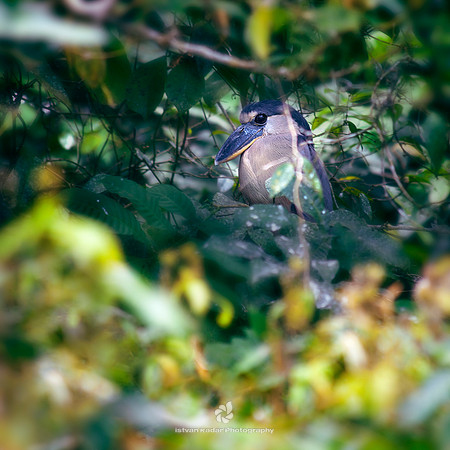
Boat-billed Heron
The Boat-billed Heron (Cochlearius cochlearius) is a solitary species found in mangrove swamps and near freshwater, especially rivers and wetlands. In Costa Rica, boat-billed herons are common along both the Caribbean and Pacific coasts.
The boat-billed heron is part of the night heron family, distinguished by a stocky build, short legs, and a unique bill. Their short, flat and wide beaks are as broad as their entire heads. Adults have bluish-grey plumage accented by a black crown and upper back, while juveniles are much browner. Their large eyes, ideal for nocturnal hunting, are dark brown with a yellow-green eyelid.
Boat-billed herons are mostly carnivorous, eating fish, worms, insects, amphibians and crustaceans. Experts believe that they rely on touch, not sight, to catch their prey. They use sound to communicate with others of their species, listening for forest sounds to detect movement and rattling their bills to signal distress.
Mated pairs put on an elaborate show: males raise their crest and both birds chatter with their beaks. These herons nest solitarily or, less commonly, within small colonies that may be made up of a mix of waterfowl.
Boat-billed herons nest in trees, bushes, or reed beds. Both males and females participate in nest building, incubating, and feeding the chicks.