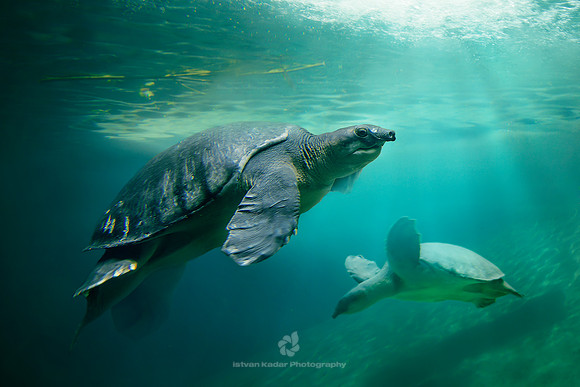
Fly River Turtle (Carettochelys insculpta)
Fly River turtle or pig-nose turtle–a freshwater species (weight: up to 30 kgs) found in Papua New Guinea and northern Australia–is a strangely cute little critter. It’s also evolutionarily important because not only is it the last member of its once widespread family (Carettochelyidae), but it also shares features with marine turtles and might represent a transition as turtles moved from freshwater to the oceans.
These turtles are opportunistic omnivores but are mainly herbivores. They eat mainly fruit such as figs and bush apples which fall from the shoreline trees. They also eat flowers, leaves and seeds too. They consume algae and submerged plants as well as insects, molluscs, crustaceans, and fish.
In Australia, the turtle suffers from habitat loss, but the problem in PNG is different—people eat the turtles and their eggs in large quantities. A new study in Biological Conservation confirms their fears: the pig-nosed turtle in PNG is disappearing.
The local human population is growing. Tribal warfare has ended and people have now settled along the riverbanks, where they can more easily find turtles. And new technologies, such as modern fishing equipment, have also aided the turtle harvest. In addition, scientists are missing much of the information about the species’ life history that would let them design a conservation plan. And then it would take decades for the turtle to recover after such a plan was implemented.
The turtle is important both to scientists and to the local PNG people who depend on them for food. Surely the two groups should work together to let the pig-nosed turtle survive.
© Istvan Kadar Photography