Prague Orloj
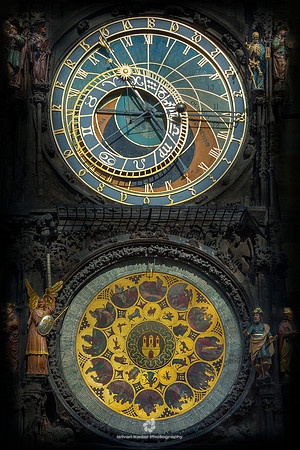
The Orloj (astronomical clock) mechanism itself has three main components: the astronomical dial, representing the position of the Sun and Moon in the sky and displaying various astronomical details; "The Walk of the Apostles", a clockwork hourly show of figures of the Apostles and other moving sculptures—notably a figure of Death (represented by a skeleton) striking the time; and a calendar dial with medallions representing the months.
The four figures flanking the clock are set in motion on the hour, and represent four things that were despised at the time of the clock's making. From left to right in the photographs, the first is Vanity, represented by a figure admiring himself in a mirror. Next, the miser holding a bag of gold represents greed or usury. Across the clock stands Death, a skeleton that strikes the time upon the hour. Finally there is a figure representing lust and earthly pleasures. On the hour, the skeleton rings the bell and immediately all other figures shake their heads, side to side, signifying their unreadiness "to go."
According to local legend, the city will suffer if the clock is neglected and its good operation is placed in jeopardy; a ghost, mounted on the clock, was supposed to nod its head in confirmation. According to the legend, the only hope was represented by a boy born on New Year's night.
The clock was first installed in 1410, making it the third-oldest astronomical clock in the world and the oldest one still operating. The calendar plate below the clock was replaced by a copy in 1880. The original is stored in the Prague City Museum.
© Istvan Kadar Photography