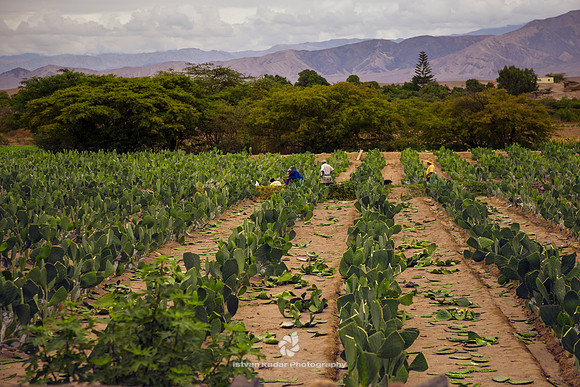
Cochineal Farming on Opuntia Plantation
Cochineals are farmed in the traditional method by planting infected cactus pads or infecting existing cacti with cochineals (insects) and harvesting the insects by hand.
Harvesting the insects is labour-intensive, as they must be individually knocked, brushed, or picked from the cacti and placed into bags. The insects are gathered by small groups of collectors who sell them to local processors or exporters.
To produce dye from cochineals, the insects are collected when they are approximately 90 days old. Eventually they can even kill the cactus. When the cacti are covered in fat female insects, about 90 days later, they are cut down and the insects are scraped off. They are killed by various methods, including putting them in hot water, steaming them, baking in a special oven or just leaving them out in the sun.
A deep crimson dye is extracted from the female cochineal insects. Cochineal is used to produce scarlet, orange, and other red tints.
It takes about 70,000 insects to make half a kilogram of cochineal dye. The market price of cochineal was between 50-80 USD per kilogram, while synthetic raw food dyes are available at prices as low as 10–20 USD per kilogram.
It is used in many foods as a ‘natural’ food colouring and is also used in traditional textiles for dying fabric. Even the famous British army ‘Redcoats’ and the Pope's red robes were coloured with cochineal.
© Istvan Kadar Photography