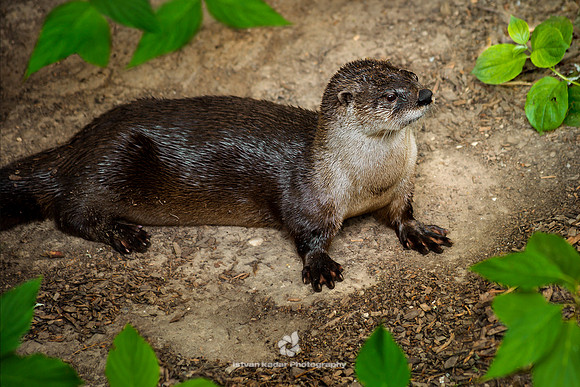
North American River Otter (Lontra canadensis)
The playful North American River Otter is equally at home in the water and on land. It makes its home in a burrow near the water's edge, and can thrive in river, lake, swamp, or estuary ecosystems.
These otters swim by propelling themselves with their powerful tails and flexing their long bodies. They remain active in winter, using ice holes to surface and breathe. They can hold their breath underwater for some eight minutes.
River otters, members of the weasel family, hunt at night and feed on whatever might be available. Fish are a favorite food, but they also eat amphibians, turtles, and crayfish.
Males do not help raise young otters. Females retreat to their underground dens to deliver litters of one to six young. When the young are only about two months old, they get an advanced swimming lesson—their mother pushes them into the water.
They love to playfully slide down snow-covered, icy, or muddy hills—often ending with a splash in the water. Otter families of mother and children can be seen enjoying such fun, which also teaches survival skills.
Otters are hunted for their fur. Pollution of rivers and streams produces loss of habitat. Other than humans, the otter has few serious enemies. Possibly a bobcat, coyote, great horned owl or bald eagle may attempt to catch an otter kit, but the young are carefully guarded by the mother.
© Istvan Kadar Photography